India–EU FTA: From Trade Liberalization to Strategic Market Entry
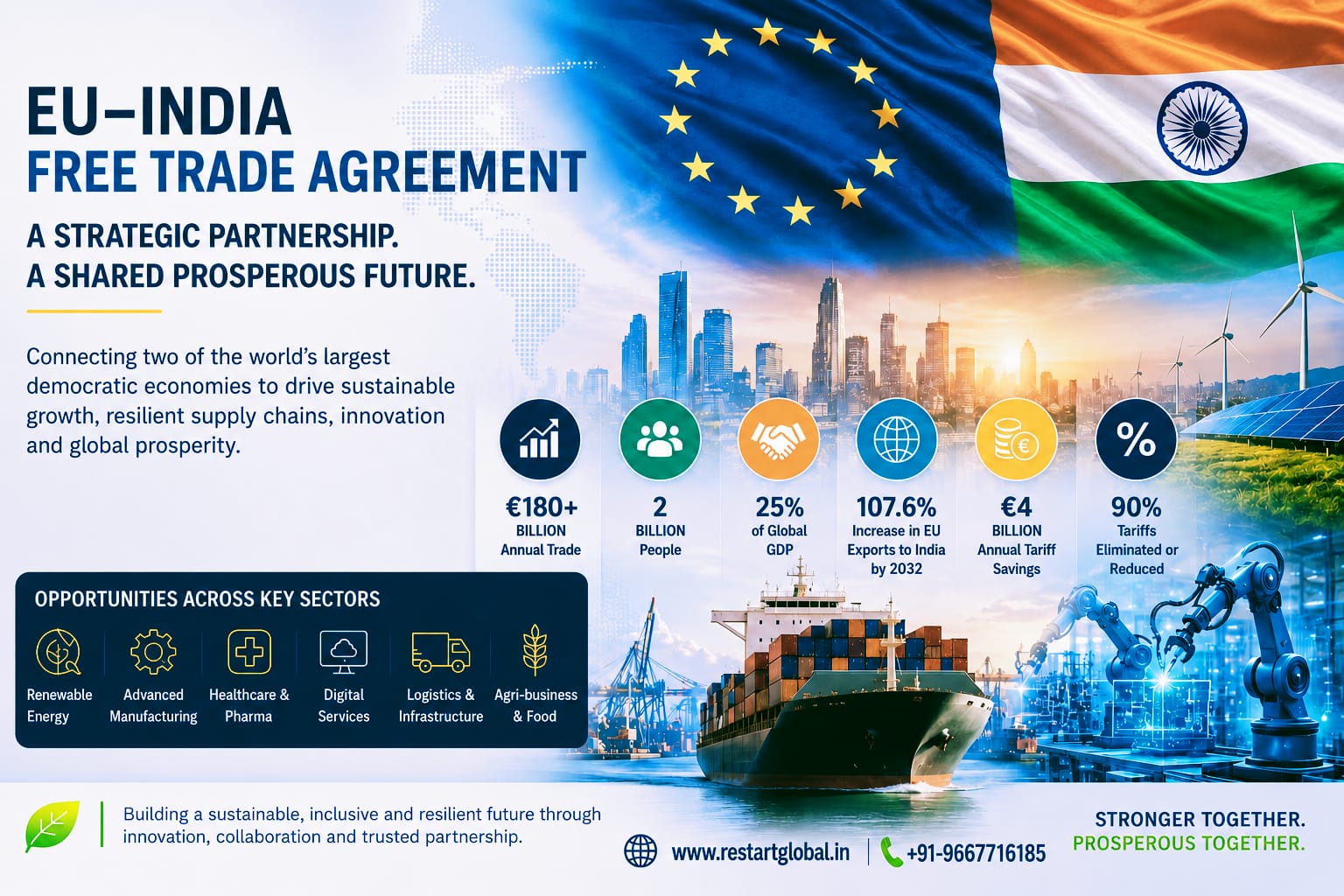
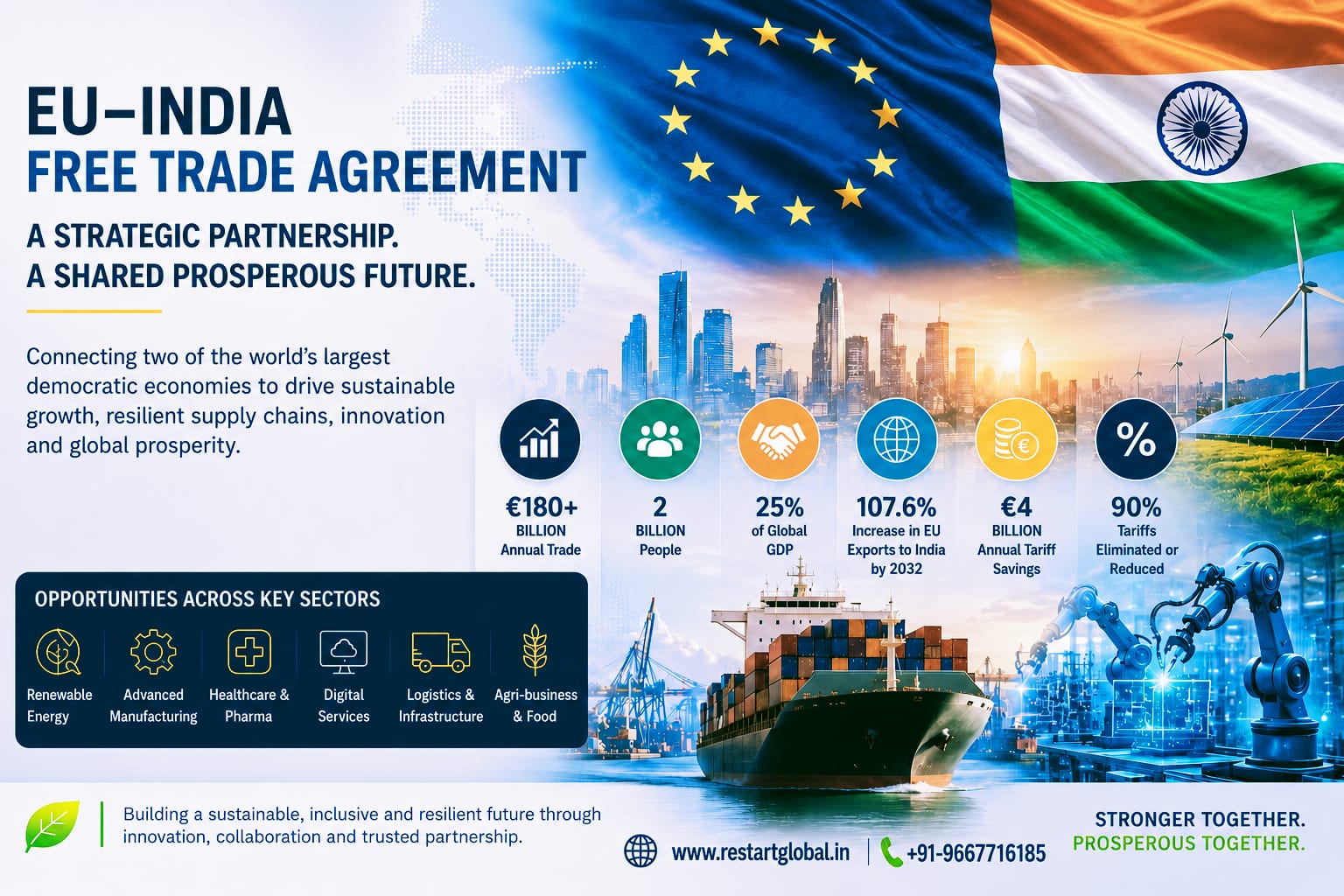
The India–EU Free Trade Agreement is not merely a trade accord; it is a strategic inflection point in the relationship between two major economic blocs. By reducing or eliminating tariffs on 96.6% of EU goods exports to India, simplifying customs processes, and expanding access in services, the agreement materially improves the commercial case for European businesses evaluating India as a growth market. For business leaders, the real question is no longer whether India offers scale, but how to convert improved market access into a durable operating advantage.
This distinction matters because trade access and market success are not the same. India remains a high-potential yet operationally complex market, where regulatory interpretation, partner selection, commercial structuring, and local execution often determine the difference between momentum and delay. EY’s discussion highlights that the FTA widens the aperture beyond conventional goods and services into areas such as digital trade and government procurement, signaling a broader and more strategic opportunity set for internationally minded companies.
For European businesses, the agreement improves the economics of entry. The European Commission states that the FTA could save up to €4 billion annually in duties on European products while opening the Indian market more deeply than India has done for any other trading partner. Sectors such as machinery and electrical equipment, chemicals, pharmaceuticals, optical and medical equipment, and parts of transport manufacturing stand to benefit from meaningful tariff reductions over time, improving competitiveness and potentially accelerating investment decisions.
Yet lower tariffs alone do not build market position. Companies that succeed in India typically combine policy awareness with disciplined execution: a clear route-to-market strategy, careful stakeholder mapping, robust compliance planning, and localized commercial engagement. This is especially relevant for mid-sized and growth-stage European firms, many of which may gain from the FTA’s dedicated provisions for small businesses, but still require a capable in-country partner to navigate the practical realities of setup, representation, and early-stage expansion.
This is where a consulting partner must move beyond generic advisory. Restart Global Consulting is positioned to help international businesses interpret the India opportunity through an execution lens: identifying viable entry pathways, supporting local coordination, strengthening compliance preparedness, and enabling credible market engagement from the outset. In an environment where first impressions, regulatory alignment, and partner quality can materially shape outcomes, on-ground intelligence becomes a strategic asset rather than an administrative convenience.
The FTA also reinforces a broader geopolitical and supply chain logic. At a time of global fragmentation and diversification, the agreement strengthens economic and political ties while making India more relevant to companies seeking resilient, multi-market growth platforms. For European firms looking to rebalance sourcing, expand commercial footprints, or build long-term access to one of the world’s fastest-growing major economies, India now presents a more compelling combination of scale, policy momentum, and strategic relevance.
The next phase of advantage will belong to businesses that act with both ambition and precision. The India–EU FTA creates a stronger framework for trade and investment, but its value will be realized by companies that translate regulatory opportunity into operational readiness. For European leadership teams, this is the moment to move from passive interest to structured market-entry planning.
Restart Global Consulting supports that transition by helping international clients approach India with strategic clarity, execution discipline, and trusted local insight. In a market where opportunity is expanding faster than certainty, the right advisory partner can turn complexity into confidence and access into growth.
 12 Jul 2026
 14 Nov 2025
 05 Jul 2025
-
05 Jul 2025
14 Nov 2025